A Brief History of the Old Schoolhouse

Erected in 1848 as Hornsey Infants’ School for St. Mary’s Parish, the Old Schoolhouse, designed by architect John Henry Taylor, is now the home of the Hornsey Historical Society. Although …
This section contains a wide range of articles about the history of the area.
Erected in 1848 as Hornsey Infants’ School for St. Mary’s Parish, the Old Schoolhouse, designed by architect John Henry Taylor, is now the home of the Hornsey Historical Society. Although …

Hornsey’s history as a parish and administrative area goes back to at least the 13th century. For most of that time, Hornsey was a rural backwater in the county of …

The Ordnance Survey was established in 1791 and the survey commenced in 1794 the first sheets to a scale of one inch to a mile were published in 1801. We …

The tower was built as part of the medieval church of St Mary when Hornsey was a small rural village in Middlesex. The lower part of the tower is medieval, …

Hornsey, established as a settlement in the pre-Conquest county of Middlesex, is a name with Anglo Saxon origins and derives from the Old English name Heringes-hege (with the ‘g’s pronounced …

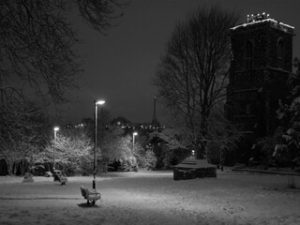
Today, all that remains of St Mary’s Church is its bell tower, standing in the former churchyard, a little back from Hornsey High Street. St Mary’s Tower is a focal …
There had been talk of the need for a local history society in Hornsey as long ago as 1909 but despite early efforts nothing was achieved until 1971. On 29th …

The name Stroud Green signifies a wet, marshy place, overgrown with brushwood and liable to flooding. Stroud Green, near Highbury, was first mentioned in 1403 when it was no more …

Until the end of the 19th century Muswell Hill remained a rural area of pasture, woods and open spaces situated on the edge of a glacial plateau overlooking the Thames …
The village of Hornsey has been submerged for well over a century in the suburbs of North London. Its name is of Saxon derivation and its history probably goes back …