






The latest articles and news from the Hornsey Historical Society.

This book is published in a new format in which local historian Ken Gay illustrates his account of Muswell Hill’s unfolding story.
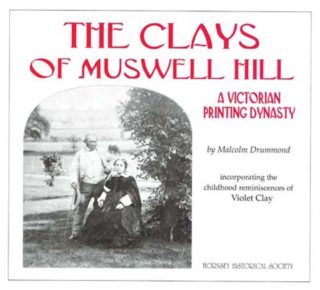
This book is about a “lost” Haringey mansion, Avenue House on Muswell Hill, the family who lived there and their connections and influence on the printing industry, and how the site became the present Rookfield estate.

With a unique collection of photographs, this book tells the true story of the “People’s Palace”, as well as the facts and the legends from its origins on rural Muswell Hill to the present time.

Memories of Hornsey was HHS’s first publication in 1976. It has been edited and revised by Dr Joan Schwitzer. Monk’s recollections of Hornsey in the 1880-1890s now includes additional material by the author subsequent to the original publication.

Haringey’s Hidden Streams retraces the routes of Haringey’s several natural streams which once flowed in the open from the “northern heights” of Highgate and Muswell Hill. Those streams are mainly now underground.

Muswell Hill Revisited contains 126 pages of old and recent views of Muswell Hill in the Tempus “Images of London” format. It includes many previously unpublished archive photos recording life in the Edwardian suburb over the past century or so.

Lost Theatres of Haringey tells the stories of six of Haringey’s long vanished theatres once located in Highgate, the Alexandra Palace, Crouch End, Tottenham and Wood Green.

The story of a man from rural Cumbria, who trained as an architect and surveyor, and played a vital part in creating a large part of the built environment of Hornsey. The author tells the story of John Farrer utilizing much archival material to illustrate his personal and professional life in this well illustrated book.

Cinemas of Haringey is a nostalgic treat for cinema buffs. This 140-page well-illustrated book describes the histories of more than 40 cinema buildings in various parts of Haringey. It tells the history from the early shop conversions, purpose-built cinematographs, through the 1930s picture palaces to today’s modern multiplexes.